5 Minute Relaxation: Quick Ways To Calm High Stress Levels
"In today's fast-paced world, here's how to calm your mind in 5 minutes: practical methods to reduce stress and restore focus."
To calm your mind quickly, you should utilize targeted breathing techniques, brief music therapy, or light physical stretching. These methods work by shifting your nervous system from a state of high alert to a state of relaxation within a very short window of time.
Key Takeaways * Mindfulness-based breathing is a proven way to reduce stress and work-related strain in just 5 minutes. * Paced breathing involves slowing your breath to 5-7 breaths per minute to help lower your heart rate and blood pressure.
* Music therapy and stretching can significantly improve your psychological well-being and physical tension levels [S1, S4].
What’s the fastest way to calm your mind?
The fluorescent lights of the office hum overhead while your fingers tap a rapid, anxious rhythm against the desk. You feel the tightness in your chest rising as another email notification pings.
If you need an immediate reset, you have three primary paths: breath, sound, or movement. Mindfulness-based breathing focuses on deep, diaphragmatic breaths to lower your heart rate. If you have headphones handy, 5-minute music therapy can help reduce stress and work-related strain.
Alternatively, a quick 5-minute stretching session can help release the physical tension that accumulates during a long workday.
But simply knowing these options exist isn't enough; you need to understand the mechanics of how they actually change your body's chemistry.
How does paced breathing reduce stress?
You sit in your parked car after a long commute, gripping the steering wheel until your knuckles turn white. The silence of the cabin feels heavy, and your breath is shallow and rapid.
According to the Journal of the American Geriatrics Society (2021), there was a clinically significant reduction in systolic BP of -7.2 mmHg in the MIM DASH group.
To reset, try paced breathing. This is not just regular breathing; it is deep diaphragmatic breathing where the rate is typically equal to or less than 5-7 breaths per minute, compared to the usual rate of 12-14 breaths per minute.
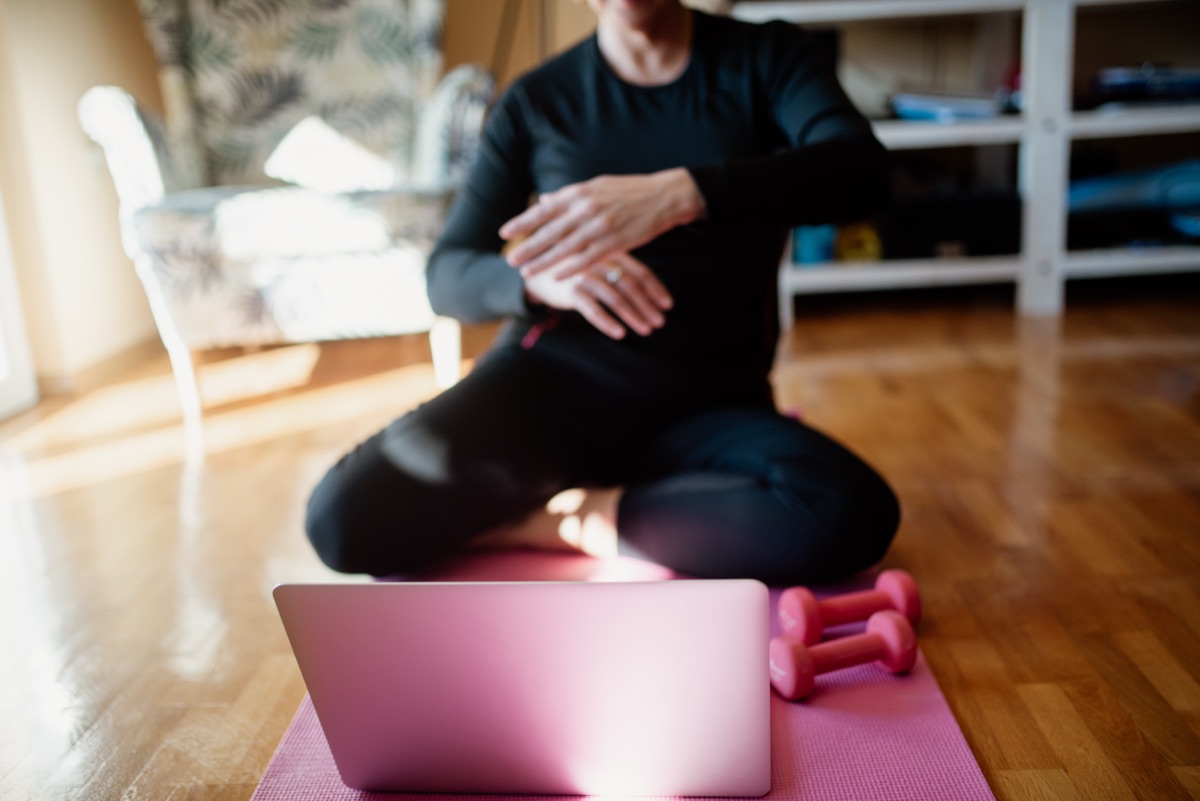
The 5-Minute Paced Breathing Routine 1. Sit upright with your feet flat on the floor. 2. Inhale deeply through your nose for 4 seconds, feeling your belly expand. 3. Hold that breath gently for 2 seconds. 4. Exhale slowly through your mouth for 6 seconds. 5. Repeat this cycle for 5 minutes.
This specific rhythm helps slow the heart rate and lower blood pressure. The effectiveness of short-duration breathwork is supported by research; a 2023 study in *Cell Reports Medicine* looked at different daily 5-minute breathwork exercises compared to mindfulness meditation over a month.
Even if you master your breath, you might find that your environment is still working against you.
Why music therapy works for stress relief?
The cafe is loud, the clinking of silverware and the roar of conversation making it impossible to concentrate on your laptop. Your headache is starting to throb behind your eyes.
Music can act as a physiological anchor. According to a study published in *Holistic Nursing Practice* (2022), mindfulness-based breathing and music therapy decreased stress and work-related strain, while also increasing psychological well-being.
To use this effectively, don't just play background noise. Choose instrumental tracks or nature sounds that have a steady, predictable rhythm. Focus entirely on the melody or the sound of falling rain for five minutes.
This shift in auditory focus helps pull your brain away from ruminating thoughts and back into the present moment. However, sometimes the stress isn't just in your mind—it's physically locked in your muscles.
What’s the best physical movement for quick recovery?
You stand up from your desk and feel a sharp pull in your lower back. Your shoulders are hunched toward your ears, locked in a permanent shrug of tension.
Physical movement is essential because stress is not just in your head; it is stored in your muscles. A 5-minute stretching routine targeting the neck, shoulders, and legs can improve circulation and reduce that physical "armor" we build up.
The impact of these physical interventions on vital signs is measurable.
Research published in the *Journal of the American Geriatrics Society* (2021) noted a clinically significant reduction in systolic blood pressure in specific movement groups, showing a reduction of -7.2 mmHg compared to only -0.7 mmHg in the attention-only group.
Quick Recovery Comparison
| Technique | Primary Focus | Best Used When... |
|---|---|---|
| Paced Breathing | Nervous System | You feel sudden panic or racing thoughts. |
| Music Therapy | Mental State | You are in a loud or distracting environment. |
| Stretching | Physical Body | You have been sitting or standing for too long. |
How to build a 5-minute stress recovery habit?
I noticed that I used to wait until I was completely overwhelmed before trying to relax. By then, my heart was racing so fast that even sitting still felt impossible. I had to learn to use these 5-minute windows *before* the breaking point. A study reported in Cell reports.
Medicine (2023) examined three different daily 5-min breathwork exercises compared with mindfulness meditation.
Building a habit requires consistency rather than duration. It is better to do 5 minutes of breathing every day than 60 minutes of meditation once a month.
Steps to Establish Your Routine 1. Pick a Trigger: Tie your 5-minute reset to an existing habit, like after your lunch break or immediately after closing your laptop for the day. 2. Select Your Tool: Decide if you need breath, sound, or movement based on how your stress is manifesting.
- Set a Timer: Use a physical timer or a phone app so you aren't constantly checking the clock. 4. Track the Feeling: Spend 30 seconds after the session noting if your focus or energy levels have improved.
While these techniques are powerful, they are not a substitute for professional medical care if you are dealing with chronic clinical anxiety or physical ailments. They are tools for daily management and mental recovery.




Comments 0